About
Biography
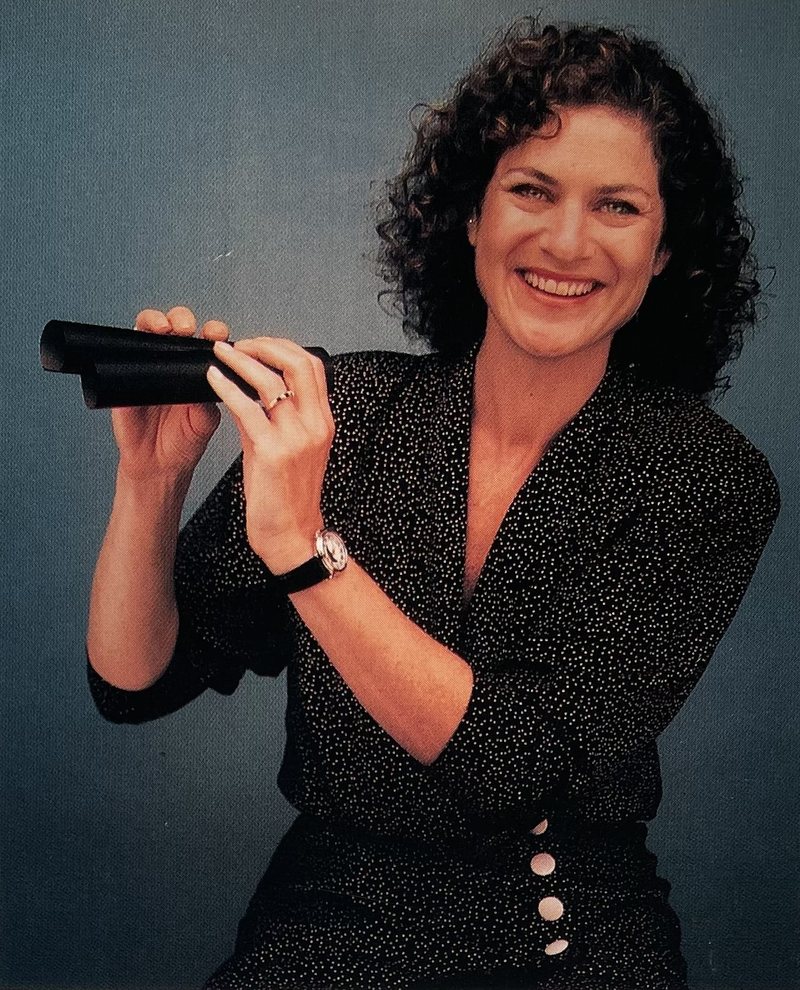
Since the launch of her career in the Young Photographers exhibition at the Museum of Modern Art in 1971, Eve Sonneman has secured a unique position for herself in the world of contemporary art. Internationally renowned as a photographer, she has participated in the 1977 Documenta and in the biennales of Venice, Paris, Strasbourg, and Australia, has published five books, and has been the subject of 77 solo exhibitions. In her own words, quoted by poet David Shapiro in the catalogue of her mid-career retrospective at the Minneapolis Institute of Arts in 1980, her photography responds to "gesture and innuendo and small changes." To Shapiro, "She is a painterly photographer [who] reminds us that photography, as with Man Ray and Rodchenko, must never be denigrated as mere materiality."
In addition to her career in photography, Sonneman works in paint, making large abstractions, watercolors, and painted objects. Her distinctive, highly personal form of pointillism has been acutely characterized by the critic Klaus Kertess as "teeming with tiny, obsessively made, evanescent rings congealing into a delicate and fugitive, floreate dew."
Eve Sonneman is represented in the permanent collections of the Museum of Modern Art, the Metropolitan Museum of Art, the Centre Pompidou, Paris, the Art Institute of Chicago, and over 30 other museums around the world. Earlier in her career Sonneman was with Leo Castelli for fourteen years, and now she is represented by Nohra Haime Gallery in New York.
Essay
Eve Sonneman is a photist
By David Cohen
Eve Sonneman is a photist. Her medium is light, as in lightness of being, radiance, speed, clarity and warmth. She is internationally renowned as a photographer, with a career that shoots across the divide between "art" and "trade" as surely as light does time and space. Slightly less familiar are her efforts with the paint brush. Her unique vision finds three principal outlets: watercolor painting, oil painting, and photography. If Sally Bowles could say, "I am a camera", Eve Sonneman can declare, "I am a tripod".
Her photography subdivides into black and white diptychs (her trademark, almost) which distill non-sequential time into quivering stillnesses, and Polaroids. These latter further subdivide into blurry, dizzy paparazzi-like sketches (sometimes diptychs, too) made with Polaroid's old-fashioned (in this digital age) handheld instantly developing device, and what one might call "machines" in the salon sense, grand set-to pieces whose creation involves wizardry in the Polaroid Studio, where the vision is correspondingly cosmic. These are her Sonnegrams.
The Sonnegram, in which dancers, swimmers and sportsmen are superimposed upon NASA photos of various planets and their moons, exploits a personally patented technology. In naming it so, Sonneman claims parity with, and at the same moment pays homage to, two paternal heros, Man Ray (he of the Rayogram) and her own father, Eric Sonneman, discoverer of antistatic and of a means to make golf balls fly faster. Eve Sonneman is a formal eclectic whose every diverse creation bears the unmistakable stamp of her sensibility. The art world is a tolerant and decent enough place but it is rarely capable of keeping up with the generosity of spirit of the men and women it serves, artists, preferring to cordon off their efforts into singular, marketable "lines". This year, however, followers of Eve Sonneman have a welcome chance to see her disparate efforts together, to savor her unity in diversity.
Sensitivity to each medium is Sonneman's glory. She responds with a vision as much as a touch specific to her chosen means. Her oils, worked slowly over many months, exploit stillness and quietude. Sensations of pure color are isolated. Individual cells must be brought together by the viewer's eye into dynamic interaction. Her watercolors, which she makes daily with diaristic fidelity, working whenever the temperature allows on her New York terrace, extend the obsession with orbs found in her oil paint pointillism and her Polaroid planets, but exploit the transparency and chance effects of the medium. Arrested explosions and implosions of radiant color collapse the boundaries between time and space. The Polaroids dramatize, almost one might say, satirize, the enigmas discovered, in the abstract, in her watercolors. They offer chance encounters between two kinds of play: they are collisions of imagination and of light.